dimanche, septembre 07, 2008

History, revisited

On 31st August 2008, we celebrate our country’s re-birth as a nation.
Rebirth? Our land is much, much older and ancient and here, we recall the continuum
of history that is preserved through the very legends of the land.


History, revisited


Our history spans more than a millennia. Our legends, ancient.

There is certainly a continuum of history that is preserved through the very legends of our land…and through our even more ancient jungle. That is why there must be effort and emphasis to preserve our legends and our million year old forest land, subjective purpose to many, but crystal clear in fact.

Researchers and historians worldwide accept that The Malay Annals, Hikayat Hang Tuah and Hikayat Seri Kelantan are clear indications of historical governance. Ruud Spruit, Director of the National Museum, Denmark recounted the Malay Annals as ‘a mixture of classical romance and factual description.’

When Tomes Pires, the visitor in Malacca in the late 1500s, recounted in his Somu Oriental the story of the Hindu prince Parameswara from Palembang who commanded his Orang Laut circa 1400s, his version closely corresponded to that of the Malay Annals. The records of the Raja of Perak, Johor and Pahang continue from this legacy.

Hikayat Merong Mahawangsa chronicled the Kedah Sultanate, arguably the earliest in our history.

These legends, are every bit as historical in value as many great monuments of history. The Ancient pyramids remained as meaningless structures until Francois Champollian unleashed the language of the Pharaohs in the 17th century and the world over became familiar with the feats of Isis, Heracles and Cleopatra. It is high time we brought our legends forth to be recognised as they offer a glimpse of the rich heritage and diverse legacy we share. For instance, the Chinese Princess, Hang Li Po, gave birth to the unique Peranakan legacy in Malacca which survives until today. Our legends are our very own legacy that preserves the idea of a country…our land that is old, cultured and civilised.

In the past, travellers like the legendary Admiral Cheng Ho were charmed by what they found in our land, most of all our people’s character and gentlemanly conduct. How unfortunate that the great Admiral’s records were destroyed by the Tang dynasty. Writers like Rudyard Kipling, Joe Conrad and Somerset Maugham and historians like R O Widstedt, who researched the Malay Annals extensively, were equally fascinated by the people and the rich history, the tapestry of life that was Malaya.


The Golden Era

For one thousand years, our land has been the choice destination of the world.

The busiest natural waterway in the world was, and still is, our very own Straits of Malacca. This has remained undisputed for the last five centuries, if not longer. Along this wonderful route, people have tasted our hospitality and loved our people. Some stayed on, many returned to their own lands with stories and tales ever fascinating. Ptolemy, the Greek geographer and astronomer circa 150 AD, named this land, Chersonese Aurea – The Golden Peninsular based on the description and stories of navigators and travellers then who constantly sought new worlds.

And stories, the favourite pastime of old were shared throughout the region. As such, there are quite a few art forms that transcend boundaries and belong to the whole Nusantara and beyond – the Wayang Kulit, Mak Yong and the art of Storytelling are among the few. It remains that these stories are generally Malaysian legends, differing from those told in its originating country. The Wayang Kulit’s version of Hikayat Maharaja Wana has undergone layers and layers of assimilation from the original Ramayana chronicles, a far, far spin-off from the original..

For many centuries, all cultures converged in the melting pot that was the trade routes to Malacca. At one point, close to 90 languages were spoken in Malacca by all the different people who populated or visited the ancient cosmopolitan city. The peninsular was a bridge, geographically and rhetorically speaking to all that was the Nusantara – in other words, South East Asia! All forms of daily aspects, rituals, entertainment and business converged here to evolve into our own identity for centuries.

Malaysia is truly the land of a thousand legends, a million people, of infinite smiles. And let us celebrate the millennia that has made our country the unique and beautiful land it is.

Happy Merdeka!

Evening Is The Whole Day


A Book Review by ninotaziz

A book is destined to be a wholly satisfying read when its first opening paragraph grips you with vise-like wonder and enchantment. Normally, this first encounter encourages one to immediately buy the book, rush home, sit in favourite corner with cup of tea and chocolates ready, and begin to devour its content immediately, tea and chocolates left untouched until the first few chapters are over and the tea too cold to savour.

Evening Is The Whole Day is such a book. From the moment I read Preeta Samarasan’s first penned line which is a lovely and graceful description of Peninsular Malaysia “There is, stretching as a bird’s head from the thin neck of the Kra Isthmus, a land that makes up half the country called Malaysia,” I was hooked. One thing for sure, I would never look at the map of Malaysia the same way again, so lyrical and poignant was the rest of Samarasan’s prose in describing our land. Etched in my mind is the image of a graceful swan.

STORYLINE
The story begins with the sacking of a young servant girl at THE mansion on Kingfisher Lane, Ipoh, The Big House – very blue and meandering house at that. Though the reader is told her tragic end, her dismissal is full of innuendoes which set the stage for the unfolding story with shocking and surprising secrets - revealed as matter of fact. The author employs extremely effective staging and build-up of the ordinary to often extraordinary conclusion.

The setting alternates between Malaysia of the 1980s and pre-Merdeka days from the time Kuala Lumpur, Penang and Ipoh were burgeoning into existence in the 1890s.

The characters , all equally provocative and well-conceived with depth, centred around a very well-to-do Indian family from the time ‘in 1899, Appa’s grandfather sailed across the Bay of Bengal to seek his fortune under familiar masters in a strange land...’ The household was coming to grips with its place in Malaysian society and surprised by the ideals, perceptions and political ramifications surrounding them.

Samaresan weaves fact and fiction seamlessly creating a wondrous and believable story, which is why it continues to draw its reader deeper and deeper into the story. One is very much aware that the story is full of interweaving plots as such the reader tends to read the book very carefully, so as not to miss out any nuances for what might come next.

PROSE
It is by pure coincidence that I sat down to read EITWD on the very same date the book started its narration of Malaysia in the 1980s. Therefore, the descriptive certainly rings true even today, “the afternoon rains...aglow with winding lines of watery yellow headlights that go on forever.” But then again, it is not this familiarity alone that kept me spell-bound. Many a book had this effect before – Wuthering Heights by Charlotte Bronte, Cave of the Clan Bear by Jane M Auel, Dune by Fank Herbert come foremost to mind, not to forget, God of Small Things by Arundhati Roy to which this novel has been compared to, time and again for more than one reason. The evocative prose strike at the very heart of an avid reader.

Samarasan’s strength lies in her command of the narrative, her prose plays with all senses, cajoles one to look at things in a new way altogether.

She has woven her characters so well that when Aasha peeps under the curtain, I peep too. When Mr Mc Dougall’s daughter’s ghost describes her death, I see the very last light she saw, when Patti feels her shame at her body’s refusal to behave with dignity in old age, I feel her shame and a slight apprehension of the future. This is a very sensual experience, sensual in the sense that the book embraces its characters and their lives thoroughly, the good, the ugly, the inevitable. Not to mention the beauty of life and the horror of one's falling from grace at times so closely bound together.

The author is generous with her unique metaphors that bring to mind the rich visual and the emotive surroundings for the characters. Her interplay between the real and the perceived world is seamless.

Nevertheless, the assault of the senses can be quite overwhelming at times. There are scenes where the author takes you from the innocent to abject sadness and brutality, then straight into Kafka-like ridicule. It is almost as if Samaresan wants to force a rollercoaster emotional ride onto the reader. Here is where one takes a sip of tea, the need to pause is so strong, then to carry on with the rest of the book.

The pace is well-timed, alternating between the going-ons of the Big House household and that of the nation, back and forth, tunnelling through time-machines. It is both languid and descriptive so that we can appreciate the characters, also fast and driven so that we are thrown into the chaotic circumstances. The effect is certainly compelling.

INSPIRING
Evening Is The Whole Day is a mesmerising and inspiring read. It has all the ingredients of a one-of-a-kind novel moving in tandem with its historical background - despair , comic, innocence – and a certain kind of magic needed to pull it altogether.

As a writer, I can almost feel all the dedication, love and most of all creative genius that Preeta Samarasan has poured into her first book. I am sure it was a process of ‘menatang minyak penuh’. I imagine her excitement, calm research, sleepless nights, and yet her confident execution of each word, the purpose and journey of the book until the last page marks the end of this adventure. I cringe to think of her upcoming days as an author after such brilliance, page after page. The fact that Samarasan has her roots in Malaysia certainly adds but does not detract from her powerful work. She is a talent unleashed, a world class writer.

Having said that, Samarasan has certainly captured the very essence of our country’s milieu, issues and coming of age like no other. It is a book that is actually painful for a Malaysian to read, the author has pulled out all punches to be true to the story and is unapologetic if the truth hurts. She chose to portray the general hatred that was the platform of the terrifying 1969 riots instead of highlighting the inspiring few who acted beyond the racial divide. As I said earlier, the truth hurts. At the same time, it is a book that Malaysians should read with an open mind, with a readiness to eat (being Malaysians), grow up, love, hate and live in their neighbour’s shoe truthfully – not with tolerance.

Simply a sensational debut for an author as ready as ever to take on the literary world.

ninotaziz
ninotaziz is the author of several books, specialising in Malaysian heritage and legends, including ‘From The Written Stone’ and ‘From The Gathering’. ‘From The Written Stone’ was one of the BITARA AWARDS recepients – 2007. Her work is inspired by the beauty of the Malay language and the folklores her mother and grandmother tell throughout the years.

Her current book projects include ‘HIKAYAT - From The Ancient Malay Kingdoms’ which comprises her works on ‘ Heroes and Princesses’, ‘From the Ancient Arts’ and ‘Tales From the the Jungle Deep’. She is also finalising a series of Malaysian legends specifically for young children.

Her claim to writing reviews, according to her comes from,’a life-long inherited passion for reading and the world of books.’The writer can be contacted at ninotaziz@yahoo.co.uk or at www.ninotazizpurplemusings.blogspot.com

dimanche, septembre 03, 2006

Rekindling Passion


During my 41st birthday celebration with close friends, friends who knew me through my teen, tried and tested years, one asked me casually how do we rekindle passion. At the time, I thought…one of those questions we all ask but never answer and left it at that. But suddenly, in the middle of the night, the nagging curiosity got the better of the writer in me. I began to realize that all of us should be asking ourselves this question. No matter how happy, how troubled, how satisfied, how contented. Remember the saying - content breeds contempt.

There is nothing that is going to be X-rated here. Discussion of what goes on between a man and wife is, after all, haram. However, I felt the topic merited attention because, in the course of daily turmoil … some things like affairs of the heart and passion just get pushed back, ignored, put off. And suddenly, 3 months later, you wonder, what happened?

Okay, I have justified to myself why I should write this piece. Even thinking about passion brings guilt to mind. Liberated woman – hosh posh. Our culture and upbringing still continue to play its vital role of shaping my values after all that reading, traveling, living. As some of you put it, after five girls, Ninot. Five girls!

Let’s start with le boudoir. What is romance without a little French. Anyway, I am simply referring to the enclave, your romantic and naughty area - the bedroom. Is this where it all starts…or restarts?

Hell no…did you fall in love with your current beau in the bedroom? Of course you did not. Your first moment could have been at the movies, on a sailing boat, registering for that Economics 101 or Calculus 100 class, etcetera. For me, as some of you know, it was at the volleyball field. Why that moment changed your life forever? Who knows. But it did.

Love swept your raging hormones (this is how my number one puts it when she has a crush…blame it on the raging hormones).

Anyway, you can’t just walk into your bedroom after a hard day’s work…at home or at the office and expect to enjoy a night of torrential d’amour. We deserve better. But we have to work a bit at it. Build the mood. Do something different. Please don’t only use that expensive J’adore or Chanel No 5 to the office or special occasions. I remember how devastated I was when my certain favourite scent of the 1990s was discontinued, Shiseido’s Fragrance Du Bois, something like that…when I had it, I need not even be there for Rudi to think of me. All I had to do was leave a scent on a card, at the door, on the bed when I am working late, on his car keys…he’d be ringing all day.

I love to read. I pour over Frank Herbert, Tanith Lee, Dan Brown, Leo Tolstoy, Charlotte Bronte, Stephen Covey, the works. A current sample of my bedtime reading today would include John Grisham, Orhan Pamuk and Salman Rushdie. Yet, once a while, I would read something like, How to Make Love to Your Man (bought at MPH, mind you) and browse through the RM 200 EROS I ordered through The Good Book Guide from London or 22 Tales of Erotism and Mysteries. Just for fun.

Pamper yourself. It doesn’t take much. My grandmother’s recipe for the ultimate bath still works wonders for me. Mandi Serum – Boil leaves of serai wangi, pandan, lengkuas, jambu batu and squeeze 7 limau nipis into the concoction and have the most refreshing hot bath ever. I have all the above in my small garden, wherever I am.

Never let too much time go by. We ladies can get by without the physical attachment for sufficiently long periods. We can dream, fantasize etcetera. Not men. Passion, sex, making love, whatever it’s called, is a physical need that has to be relieved for them. If your doctor tells you your pregnancy is problem free, have fun til the very end. It also speeds up the baby’s arrival. Trust me on this.

And then, exercise. Not necessarily to get in shape. Just to feel good about yourself. To feel positive. There are hormones that comes with exercising that simply encourage you in this direction. Help you feel sexier.

What I love the most is giving each other a good rubdown or massage. Simple massages – the soles. The shoulders. The back of the neck. Seemingly so innocent.

Most of all, talk to your other half about everyday things. The bills, Mahathir’s tiff with Pak Lah, the budget, whatever. Then talk casually about what you’d like to do for each other, to each other two days before you actually do anything. Think about it. Dream about it. Make sure when you tell him you miss him, he is fully aware of what you miss. It takes a little bit of courage. Try it. Even SMS it.

By the way, most of the things I have suggested here are things we do for ourselves. Not for our partner. For when we love ourselves, treat ourselves right, feel good, that’s when we can make things happen.

Going back to culture and upbringing, I think we should not hide away from discussions on sex with our daughters. When mine were very, very young and asked me about where babies came from, I told the girls that a baby was one of the nicest wedding presents from Allah. Today, when they ask me about ‘what you do in the middle of the night’ or ‘what you do to get a baby’, I tell them Daddy and I enjoy one of the loveliest gift Allah bestowed a husband and wife. And they go...EEE! And pretend to close their ears. Then I tell them what my mother told me… be sure to be married first. So many wrong things can happen. The wrong guy…no matter how nice they are. He could be wrong for you. Aids. Unwanted babies you can’t take care of. Broken dreams. Missing out on college. Not to forget the burden of dosa. Marriage comes with all sorts of commitments.

But never turn passion into a shameful topic.

It is one of the most beautiful gifts. Enjoy it.

samedi, juillet 22, 2006

Bacalah

In the last ten years or so, more and more works by our fellow Malaysians like Rani Manicka, Azizi Ali, and Adibah Amin (‘cikgu’) , not to mention Club member and author, Lillian Too, who wins hands down in terms of number of book sales, have enjoyed tremendous success.

There is a growing and determined crop of writers, no matter how daunting the challenges of the publication world, who have prevailed to see their words of wisdom, wit and genius fly off the printing press. And into this growing intelligentsia, Tash Aw, Taipei born, Malaysian bred and today, citizen of the world, breaks into the scene with his Whitbread First Novel award winning The Harmony Silk Factory. I am proud to know he used to run around the Royal Lake Club in his swimming suit and spent many hours at one of my favourite places at the Royal Lake Club, the Children’s Library.


This surely is indicative of a growing community of Malaysian readers and writers, passionate and knowledgeable enough about their areas of expertise to share their views, despite the laments we hear and read on Malaysiakini.com on the lack of reading habits, a culture of learning and openness among Malaysians. Writing, and writing well can only be born of a love for reading and deep research unless your surname happened to be Bronte, and the love for writing came from hours of fantasy play, a streak of genius and a love for the moors of Yorkshire.

A few years back, a Club survey was conducted to see which activity or recreational facility was the most popular. It was certainly not surprising to note that the Library came out tops (a good reminder at this juncture when the ‘powers that be’ in the Club think about redevelopment – the Library really needs more space to accomodate its growing number of readers). It brings a measure of pride to see that there is a multitude of members who contribute to the reading materials as well, so much so that this August, the Club is able to organise the Anniversary Tea Session to honour many of these writers and to invite members to meet them in person for exchange of ideas.

But the fact is that the Club, while it reflects the society we live in, is really an enclave of the privileged. Which means, the children of the Club are privileged to be able to read by the time they received their pink membership card, and the adult members, either had an early love for reading, or now invest more and more time into reading, thus are privileged to enjoy all the plusses that reading brings about. The reading habit endows a reader with knowledge, confidence, communication skills and spurs the gift of creativity - all the qualities to portray the successful.

It however remains true that the rest of the country has had a tough time embracing the habit of reading. 2 years ago, the Minister of Education made a statement at one of the many ceremonies he attended and said, “...we must ensure that as we prepare our children for a very different world than the one in which we grew up, we do not neglect to equip them with the core human values which have not changed since the time the Prophet Muhammad - may peace be upon him, Aristotle and Confucius.” At the same occasion , he also urged Malaysians to rethink and re-appraise our core commitments as human beings, as parents spouses, employers, employees and citizen.

I can hardly remember the rest of the speech, but this particularly comment struck me because every muslim child knows that the first ever revelation to the Prophet Muhammad s.a.w started with the single command ‘Iqra’ or ‘Bacalah’. In that one little word, lies the essence of religion, a drive for knowledge to make us a better person, a better people. We know this and yet, we are not doing enough. Perhaps most significantly as parents, as individuals, as a workforce, as citizens.

The Reading Promotion Policy was initiated to implement the objective of the National Library of Malaysia under the National Library (Amendment) Act 1987 (Act A667) Part II Section 4(2)(m )which is 'to promote and facilitate the development of the reading habit'. This policy is in line with the strategy of the National Policy on Library and Information Services article 4.7.5: 'to instill and to develop a reading habit'.

Its objectives are many, among which are to:
· To raise an awareness of the importance of reading to the Malaysian society.
· To cultivate interest and develop the reading habit among Malaysians.
· To raise the reading standard of Malaysians.
· To promote a lifetime of learning and love for knowledge.

Almost 20 years on, we need to gauge our real progress. Otherwise, policies will be just that, policies - unless we ensure its implementation and results.

A Club member once said to me, ‘I do not want to tolerate my neighbours (referring to the often tooted calls for a tolerant society) I want to understand and appreciate them.’ Understanding can come easier with a sincere effort to learn about each others ways and tradition, and we can only do this in two ways - through experience or through reading. Perhaps reading, together with other core values, can help make a difference in our goals for a Muhibbah society.

If only we remember that our children can love that which they have been exposed to. Glenn Doman, author of How To Teach Your Baby To Read, maintains that since a child learns the most between the time he is born until he is about 5 years old, reading and any other quest for knowledge should be instilled within this period, long before most little toddlers even step into a Library. The most successful mothers in carrying out the Glenn Doman Method have been those who start their children early and display “an almost ‘dumb-blond-like’ enthusiasm” for every progress the child makes in reading. The child responds positively and yearns to do even better at reading. Whatever you do, whether reading to your child at bedtime, making trips to the library and the book store a weekly or monthly ‘special occasion’ or starting book projects - all this helps a child to love reading from an early stage, a beautiful gift which would stay with them for a lifetime, no matter how enjoyable that computer game or Barbie doll mansion are.

And that is the best gift a parent can give – the joy of reading, a burning quest for knowledge.

For life.

I would like to say a little thank you to Mr Eric Baxendale – he urged me one day while we were having tea at the Lobby Cake Counter, to start writing again before the toils of work drown me and whatever penchant I had for writing dissappears again...

mardi, juin 20, 2006

The Pioneers - Felda Lurah Bilut


Lurah Bilut. 1958.A small settlement on the fringe of the deep and dense jungle of Pahang.

This FELDA documentary caught my eye some years ago. The feature was on its first ever settlement in the country. Tunku Abdul Rahman and Tun Razak’s pet project on rural development. An economic experiment.No more, no less. Or did the future of rural development lie in this one settlement?

It is today, a showcase for the pioneering spirit of the times. The pride and joy of the FELDA project as many of its original settlers have turned millionaires. Who could have seen how far FELDA was to have ventured? Even in its inception, it was not clear where the project would land itself. This was not a project that would manifest itself within a specific number of years. It was not measured by physical scales...whether it was the tallest, highest or biggest there was.Its success was measured by the enduring spirit of pioneers, belief and sweat. Such was the visionary powers of these two leaders.

Why did this particular documentary catch my eye?

I remembered vaguely that my late grandfather used to teach in Lurah Bilut in the 1960s. We used to laugh over stories how the whole family including 8 children all of school going age had to ‘meredah hutan’ to reach the settlement. And how in love my grandmother must have been to have followed him into such wilderness.

I immediately asked my mother after watching the documentary about the story behind the move to Lurah Bilut. It turned out that grandfather was the first ever headmaster for the school which opened in 1961.She related stories of how he took on the Minister of Education at the time, demanding for chairs and tables before the school starts.

I then remembered other little things about grandfather, gently hinting at the nature of the man, rather ahead of the times, eccentric, yet staunchly committed to the appearance of the conservative scholar. Rather like Sherlock Holmes, the epitome of an Englishman, yet forgiven for his discretions like cocaine addiction and overbearing superior complex[Holme's I mean!}.

Unique, nevertheless.

To be continued...

lundi, juin 19, 2006

World Cup 2006


Mr Kofi Annan, I agree with you whole-heartedly.I loved your article, and felt the same yearning for worldwide fairplay on a level playing pitch...unlikely though it may be. A world where it doesn't matter whether you are poor or rich...where talent and teamwork make the difference. Perhaps the secret of the World Cup phenomenon lies in the fact that it is something you yearn for, it only comes once every four years. As if humanity needed to wash away all the bigotry and dirt with a dose of good old fashioned sportsmanship.

As I sit here admiring Spain's grit and determined attack on Tunisia...the game is still on, I marvel at the way the World Cup continues to be a sort of home coming for me.Though Rudi teases me relentlessly about the real reason I love the World Cup and the England team so much when I just scan through the English Premier League, the fact is I feel closest to my late Dad during this time. We used to stay up late night and debate on the outcome, him being such an ardent fan of Argentina and me of Brazil at the time made for heated father and daughter predictions. But then, we watched great tennis and badminton matches with almost the same passion.Today, Dad and I would have been formidable contenders for all trivia contest as he would be spot on on most of the difficult questions on football.

It is no wonder that Rudi and I share the same enthusiastic passion for this festival of sorts. Rudi was after all a footballer and a striker at that. Part of our family outings included picnics while cheering him on the field. Still he frowns when his six month pregnant wife stays up to the wee hours of the morning to watch a game or two. He hates the England side...and couldn't understand why I was so upset when Rooney was first injured. I argued that the World Cup this year needed the likes of Rooney, Torres and Critiano Ronaldo as the days of Ronaldo, Figo and Zidane come to a close...albeit to an illustrious career in football.

This year, Iman takes part in this cyclic tradition as she cheers on her favorite team, Italy. While Italy is not doing too well at this stage, Iman is a true fan of the Italian League and can rattle of teams and players in the way I rattled about Pahang players when I was twelve. The other day, we argued about how Uruguay was pronounced and I was so overwhelmed by the thoughts of Dad. How reminiscent. Dad and I had the same little discussion so many World Cups ago...and I stood corrected. And here I was, telling my daughter not to take this on with me...for her grandfather had put me in my place...there were still many lessons in this world that I could learn from him no matter how far I've journeyed. He was so right. 4 years gone, and I am still learning from him.


Perhaps this year, his Argentine side would thriumph.

As he has.

jeudi, octobre 20, 2005

Warisan Penglipurlara

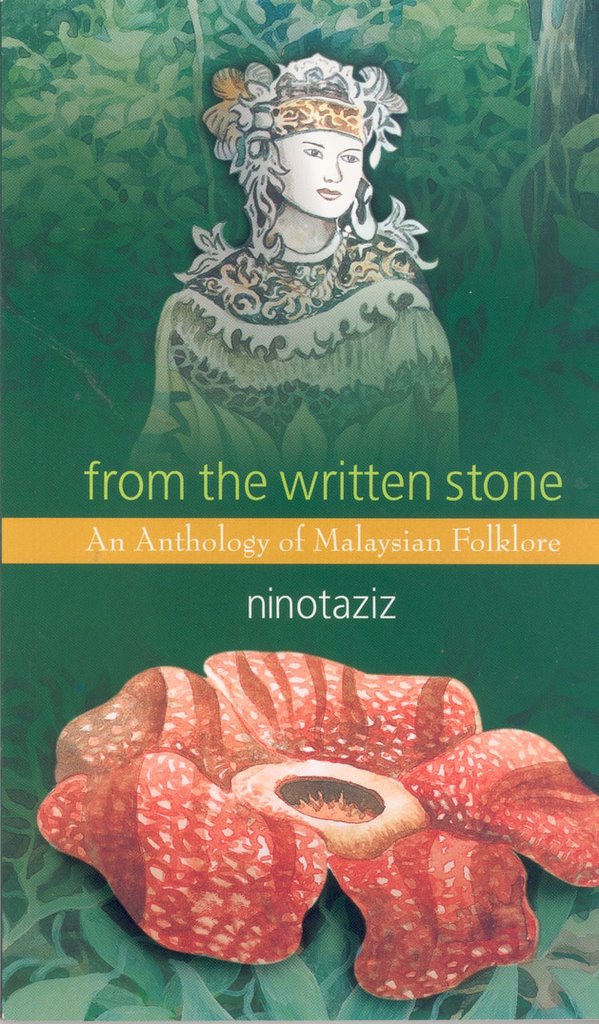
FROM THE WRITTEN STONE oleh ninotaziz

‘FROM THE WRITTEN STONE’ adalah koleksi/antologi cerita-cerita Hikayat Melayu lama yang ditulis oleh ninotaziz dan diterbitkan olen Utusan Publishers and Distributors Sdn dan Bhd.

Hasil kesusasteraan Melayu tradisional lama yang termasyhur seperti Hikayat Merong Mahawangsa, Shair Siti Zubaidah Perang China, Hikayat Malim Deman, Hikayat Hang Tuah, terutamanya Sejarah Melayu atau Sulalat-us-Salatin dan sebagainya adalah warisan kebudayaan yang tidak ternilai dan diakui keagungan karyanya. Malah sejak kurun ke 18, teks Sejarah Melayu menerima perhatian ahli sastera dan sejarah seperti Petrus Van Der Vorm (1707-1708), John Leyden, Sir Stamford Raffles dan Abdullah Munshi (kurun ke19), sehingga pengulasan dan kajian mendalam oleh R O Winstedt. Hari ini hikayat lama Melayu masih menjadi topic thesis PHD pengkaji-pengkaji kesasterawaan didalam negara serta diseluruh dunia seperti di London, Perancis dan di China.

Hikayat lama ini menyingkap peristiwa dan cerita-cerita asal keturunan raja-raja, sejarah setempat dan adat resam Melayu lama. Tapi hakikatnya, hikayat-hikayat ini kekal hingga hari ini oleh kerana tradisi penglipurlara yang menghiburkan para istana dan rakyat jelata sejak zaman silam lagi. Pada kurun ke 16, barulah timbul teks-teks hikayat yang di perintahkan penghasilannya supaya ‘hari pertuturan segala raja-raja Melayu serta adat istiadatnya supaya didengar oleh anak cucu kita yang kemudiannya dari kita dan diketahuinyalah segala perakataan syahadan beroleh faedahlah mereka daripadanya.”

Dalam konteks ini, sebagai penulis FROM THE WRITTEN STONE, saya mengutarakan tradisi penglipurlara ini sebagai penyumbang kesinambungan tradisi sastera Melayu. Cerita-cerita hikayat ini selain dari menghiburkan, juga mencerminkan budaya bangsa yang bertamadun, klasik dan cosmopolitan. Oleh itu, ianya patut diketengahkan sebagai satu warisan bangsa yang sama penting, jika tidak yang terpenting, setanding dengan warisan seni, kraf, pementasan dan sebagainya.

Warisan budaya akan hilang jika tidak diberi nafas baru oleh setiap generasi. Dengan menulis didalam Bahasa Inggeris, saya cuba memperkenalkan hikayat-hikayat Melayu kepada pembaca seperti pelajar, pelancung, diplomat, ahli-ahli korporat dengan harapan cerita-cerita ini sama masyhur seperti cerita-cerita agung lain seperti hasil nukilan Homer, Tolkien dan penyajak Sanskrit Valmiki. Cerita-cerita hikayat seperti Illiad, Lord of the Rings (walaupun baru 50 tahun, dikenali seluruh dunia) dan Ramayana malah ‘fairy tales’ menjadi bacaan lazim kanak-kanak seluruh dunia termasuk dinegara kita. Bukankah elok jika anak-anak bangsa kita dapat membaca cerita hikayat kita sendiri disamping mempelajari hikayat-hikayat lain dunia?

KEUNIKAN BUKU/VCD ‘FROM THE WRITTEN STONE’

1 Tidak banyak hikayat ditulis didalam bahasa Inggeris terutama untuk pembaca umum. Saya ingin mempopularkan hikayat ataupun cerita ‘folklore’ nusantara kita seperti yang dibuat olen penulis terkenal Andrew Lang.

2 FROM THE WRITTEN STONE ditulis didalam bahasa Inggeris gabungan bentuk ‘prose’ dan ‘poetry’ yang tinggi bentuk dan nilai penulisannya

3 Menggunakan illustrasi atau lukisan yang indah menerapkan ciri-ciri unik Malaysia seperti alam flora dan fauna, alat kegunaan harian, pemandangan indah yang lazim di bumi dan lautan kita, pemakaian tradisi klasik yang mencerminkan budaya Malaysia berbilang kaum.

4 Penerapan pantun asal hikayat untuk merakamkan keindahan bahasa Melayu asli dan asal yang telah ujud zaman berzaman, kekal hingga hari ini

5 Koleksi cerita-cerita yang mencerminkan budaya majmuk – satu warisan yang telah ujud berkurun lamanya di nusantara

6 Berdasarkan ‘research’ yang mendalam hikayat serta kajian sastera terkini

Saya berani mengatakan berdasarkan sebab-sebab diatas, tiada koleksi yang ujud hari ini seperti ‘FROM THE WRITTEN STONE’ serta buku-buku saya seterusnya ‘FROM THE GATHERING’ dan ‘FROM THE MAKYUNG’ terbitan Utusan Publications and Distributors.

Namun, terdapat cerita-cerita sejarah yang tertulis didalam bahasa Inggeris yang amat baik seperti ‘A CHILDREN’S HISTORY OF MALAYSIA’ yang ditulis oleh Tunku Halim terbitan Pelanduk.

Saya berazam terus giat menulis cerita-cerita hikayat nusantara kerana saya berpendapat hikayat lama kita amat kaya dengan nilai kesasterawaan. Oleh kerana Bahasa Melayu menjadi Lingua Franca dikurun ke 15, hikayat-hikayat Melayu juga berunsurkan sejarah dan ‘folklore’ serantau Campa, Indonesia, Siam dan sebagainya juga patut diperkenalkan sebagai hikayat Melayu lama.

dimanche, octobre 09, 2005

Rudi

They say when you meet the love of your life, time stops.

It did for me. Rudi was playing volleyball and the way he moved caught my eye. He was certainly beautiful to look at.

But then, he smiled and I immediately, irrevocably fell in love.

Since then, so much has happened and yet in some ways, time stood still. I remember riding on his motorbike throughout the night, just stopping anywhere and everywhere to chat. He would read me poetry on the balcony and play 'memory' with Iman and put Inas on his shoulders. The first concert we saw together with the girls was KRU at PWTC.

It's the little things that count. That he would take me to see Moulin Rouge - without me asking and rent Monalisa Smile for me. During my writing spells - where I write and research for hours at a stretch, particularly over a weekend, he would take the kids out. Today, I love the way he reads Barney to Irani and plays with Ilena.

There were so many things - kerang bakar, telling him the story of The Little Prince by De Antoine Saint-Exupery, billiards, trainrides, becha rides...little things like little miniature cards and smart tag readers to make my ride to work a little more easier.

When we are in Kelantan, I need not ask for anything. It is as if he can anticipate whatever I need and have his sisters send it to me.

After being unable to write for so many years, I immediately started writing again the day after I met Rudi. And have now completed 2 books.

I told someone, when I am happy nowadays, it is as if I am the happiest woman on earth. And when I am unhappy, it is as if all the anger can't contain my fury.

I thank God for Rudi, my Sundancer, husband and best friend.

mercredi, octobre 05, 2005

Inas' Pledge and Algebra

Inas had her first dose of Algebra. And loved it.

And she solemnly pledged that she is going to start studying hard. Loved her drawing of the human respitory system.

by the way, Inas is so gifted at drawing, I wonder at times where it comes from. Must put her sketches up on Purple Clouds.

The Picnic

Colour My World

Birthdays

On Ilena's birthday, 9 August, we had a small birthday party and a studio photography session. Ilena started walking almost immediately and just loves to toddle around.

And my birthday was the worst day in the office. Until I reached home and Irani said, " Ilove you soooo much , Mak." in her heartfelt manner with mona lisa smile.

That made my day the best ever.

UPSR MAdness

To think that I would have to go through this in two years time.

Nevertheless, I enjoyed this roller coaster ride through Iman's first major step in life. Earlier this year, she panicked and broke down in tears when her results were less than satisfactory. Throughout the months, a stronger Iman emerged . In August, she did her Piano exam which she eventually passed and in September, her UPSR after aceing her trials.

So, the standard sixers enjoyed themselves in Langkawi for 3 days. No matter how she does, I am proud of her for she came through with much diligence, determination and self discipline.

Congratulations, Iman.

Al-Fatihah

My dearest aunt, albeit a bit strange and flamboyant, passed away in August. Auntie Yah took care of me when I was little. She would make sure we are scrubbed clean after playing in the rain and check our school bags for any 'extra' coins which would somehow make its way there. She was also my father's secretary. She would make the loveliest Sardine Sandwiches using an iron, and make the most marvellous nasi goreng. When I was going through my divorce, she was a tower of strength and Iman, Inas and I stayed with her in a shoplot on the 4th floor, after leaving Jaf.

Long before anybody could tolerate the idea of me marrying Rudi for the variety of reasons, Auntie Yah and Shahrul became his best buddies, Rudi becoming an ardent admirer of her cooking. Those were blissful days, poor but quite enchanting.

I wanted so much for Auntie Yah to stay with us come December when we move to Rawang. But it was not meant to be. On 27 August,2005 I was at UH, never really accepting the fact that she might be leaving us...evenwhile I was reading the Yassin. I was so preoccupied in doing the right thing, making sure Shahrul gets to see his mother one last time, consoling him when she was finally no longer with us, I forgot to remember the times.

Today, on he first day of Ramadhan, I will say a little prayer for her, May she rest in peace.

mercredi, mai 25, 2005

Inas, the violin-player

Of course Inas is so much more than the violin player.


She is the mirror of emotions, the dancer, my rhymemaker, homemaker, little architect, cartoonist, animal lover. She loves her bicycle and wants to learn French (I suspect so that she can study Architecture in Paris where the Louvre Museum and the I Pei pyramid are). I also suspect when Inas was smaller, she had ESP for she could relate a lot of things I never knew she was in the know and could always, ALWAYS locate missing items.

But when she plays the violin, she is a marvel and her music comes through as happy, enchanting and beautifully haunting as well. And Inas herself? She radiates. And becomes an angel.

Inas' BFF is Shahida, a tall lanky sweet child who made the news two weeks ago when she was chased by two rottweilers, saved only by a neighbour who saw her tearing, dashing away on her bike before falling into a drain. They call each other daily and have sleepovers. But Inas is also the sister who knows just how to make Ilena smile or brings back sweets for Irani.

All the girls love their books, even Ilena, and Inas loves her Enid Blyton most of all. And her Art Attack magazines. And her Fairytale anthology.

And I love her just the way she is.

Iman, the pre-teen

That's what Iman and her gang call themselves - pre-teens. By the way, the gang comprise Shawal - ms popular, smart, blog genius; Holly Szia - budding writer, witty, tall; Caryn - sweet, adorable; Farah - world traveller, going thru pain; Zulaikha - booklover, studious, Nicole - I have yet to get to know Nicole, she seems quiet and Iman - budding writer with her head bursting with stories (the first ever was The Treasure of Life), music and radio junkie, responsible, ultimate teen planner (that comes from juggling two families), activity go-getter, beastly at times to her sisters. And there's Ally in the UK.

When I see Iman at this stage in her life, I remember my growing up days fondly. But Iman is so much more resilient, capable and techno-savvy than I ever was.She loves playing jazzy numbers on the piano (when she's angry, the piano is played loud, fast and staccato) and sees the quirky and funny in many an odd situations. She insisted on tuition, insisted on camping despite her asma and so faithfully took her medication along, same thing when she was performing in Barbie Rapunzel when she had to wear a rabbit suit! A taskmaster when she teaches Inas, but she manages to put the points across. Wasn't it Anna, in The King And I, who said, 'By your students you are thought.' Anyway, Iman has grit and determination and I love her for it.

She would talk to me about almost everything and we'd buy books on subjects we find difficult to discuss like On The Spot.And discuss it anyway. And she'd be the first to ask me about lesbians and tell me to make sure 'night-activities' stay private!

Despite of my grumbling and yes, sometimes yelling about her room, her keys, her shoes, she really makes me proud and Iman, in life, as long as you do YOUR best, I am happy with that.

vendredi, mai 13, 2005

My newest baby - From The Written Stone

FROM THE WRITTEN STONE
by Zalina Abdul Aziz@ninotaziz
(Published by Utusan Publishers and Distributors)


Malaysia has a rich literary heritage in the form of folklore, legends and epics, which has survived the birth and destruction of many civilizations throughout our history. Puisi, pantun, gurindam and syair – epic poem and prose, are but some of the enduring legacies of our forefathers from a millennia ago. Its vivid imaginary, mythical qualities and elegant language
provide and enlightening wealth of literary wonder.


FROM THE WRITTEN STONE is the testimony to our cultured past which is interwoven into the very fabric of our society. The influence of the Islam, Hindu and Chinese made its way over the centuries into our legends and has its own history in its telling.

The Book – From The Written Stone
An anthology of Malaysian Folklore and Legends, rewritten in beautiful poetry and prose, produced as a homage to the opulent and flowery roots of our language, for the world to appreciate. It is an apt introduction to the most famous legends of the land. The text is presented with dreamlike quality illustrations.

Special Edition
This anthology makes the perfect coffee-table edition or and introduction gift for Diplomatic, Trade, Liaison parties or a leisure read at Hotels/Airlines, tourist and the general public. It immediately projects the idea of Malaysia, that is:
• Cultured, rich and diverse; a society proud of its Ancient History
• Mythical and Exotic

Children’s Edition
An abridged version, made suitable for children’s pastime reading, a perfect introduction to Malaysian popular and classic folklore.

*Illustration by Rudi, a recent graduate of the Art School, UiTM.
Translation provided by Kamariah Jaafar@Kelana - in progress

My Life In My Bag?

Today is carwash day.


And as I added my new smart-tag reader into my already bulging DK bag, I began to marvel at the array of stuff I have inside. How is all this reflective of me?

The year is 2005. In the 1980s, I had my IC, some cash if it's early in the quarter, my Student ID, my ISIC card, an OC-Transpo monthly pass if it's winter, my Nova Scotia bank book, ATM card and that's about it.

Today? Let's see...

In my Organiser
IC
Driving Licence
Credit Cards
3 BookStore Memberships
Yassin
Office Entry Card

Hi-Tech
Camera-phone
Car Stereo head
Smart-Tag Reader
2 pen-drives

Mom Stuff
Ilena's Pampers-case
Colour Pencils
Ira's Report card
Extra 'Ikat rambut'stuff
Inas' McD membersship card

Writer-in-me-stuff
Current Read
Pencilcase
Notebook cum journal

Just me
Car-Keys
Sunglasses
Small make-up case

Hmm...

mardi, avril 26, 2005

Ilena, my princess

Nadessia Ilena.

Sweet. Perfect. Lilting laughter. 2 front teeth. Strong. Soft. Angelic. Manja. Hungry. Playful. Daddy's girl.

vendredi, novembre 26, 2004

ANCIENT KINGDOMS A potted History of Hindu influence and the Coming of Islam

Hikayat Merong Mahawangsa, a grand Malay epic, tells the story of Langkasuka, a Kingdom whose origins were shrouded in mystery. Mythology has it that Langkasuka, a peaceful and prosperous settlement was supposedly brought to prominence by an Indian prince who led his people in a great battle against the ferocious Garuda. The lack of documented proof does not rule out the existence of this Malay Kingdom as references in Chinese and Indian ancient text point to the existence of an early Hindu civilization near Gunung Jerai, Kedah circa 100 AD.

The fact remains that around the same period, India sought safer and faster routes in search of gold as the marauding Huns had cut-off the overland route to China and the Roman Emperor Vespian had stopped shipments of gold to India. In addition, the lure of Savarndvipa and Savarnabhumi - a mystical wealthy Kingdom spurred an Indian odyssey to the East which brought them to the Malay archipelago. As we know, Ptolemy found the Malay Peninsular significant enough to call it Aureus Chernysese which means Land of Gold on his legendary maps, further suggesting that the peninsular was an attractive destination for those in search of riches and wealth.

The Straits of Melaka was then, and remains until today, the busiest natural waterway in the world and the whole world sought this passage for purposes of trade, religion and expansion. But the  region was not entirely kind to visitors - the humidity, the forest was daunting and the Orang Laut  controlled the waters vigorously. So religious scholars, travelers and traders generally mixed with locals and gained riches only to return to their country of origin as were their original intention. However, the ideologies and religion generally replaced the paganism and animism widely practiced by the people of the land.

About four centuries later, around 450AD, Srivijaya rose to prominence in Palembang, Sumatera and for a millennia shaped much of the civilization and trade in the region. Srivijaya remained a powerful kingdom based on Hinduism/Buddhism which conquered many of the coastal areas of the islands including Kedah and ruled over much of the Malay Peninsula in the 9th century. The region continued to grow as a centre for gold, aromatic woods and spices and the Hindu culture swept throughout the land.

Their princes and princesses widely travelled and this influence extended all over the region. One instance is the alliance between Sailendra and Srivijaya when Samaratungga, who finalized the candy we now know as Borobodur, married Dewi Tara in the 9th century. Their son Balaputra returned to Palembang, after his sister Pramodhani and her husband engineered a coup,  to rule and Srivijaya became even more powerful than before.

From Java, Majapahit, the last of the Hindu Empires slowly overtook Srivijaya as the greatest maritime empire in the region. Hayam Wuruk, its renowned ruler reigned from 1350 to 1389 together with Gajah Mada, its most powerful minister in office from 1331 to 1364, extended Majapahit’s rule over Sumatra, Bali, Borneo and Malaya especially Kedah and Patani. Islam began to spread its influence, beginning in Pasai, then Jambi.

At the turn of the 14th century, a rebel prince of Palembang, Parameswara, fled to Tumasek, then continued to travel up-north along the coast to found Malacca. His diplomatic ties with China and a structured governmental hierarchy including firm policing of its waters to keep away pirates ensured a firm footing for Malacca’s continued growth as the region’s most prominent port. Malacca became the center of court, arts and trade.

Parameswara’s conversion to Islam formalized and marked the arrival of Islam to the Malay Peninsula. The Malaccan Sultanate which lasted until 1511 became the model for other sovereigns in the land with firm adherence to the Islamic teachings and Malay traditions.

October 2004
Related Posts with Thumbnails